Michael Lowe of Whitehouse has been in the business over 18 years. He uses his knowledge and equipment to clean all types of surfaces and stains. He has even served as a past national board member of the PWNA (Pressure Washers of North America). He has also been a speaker at conventions.
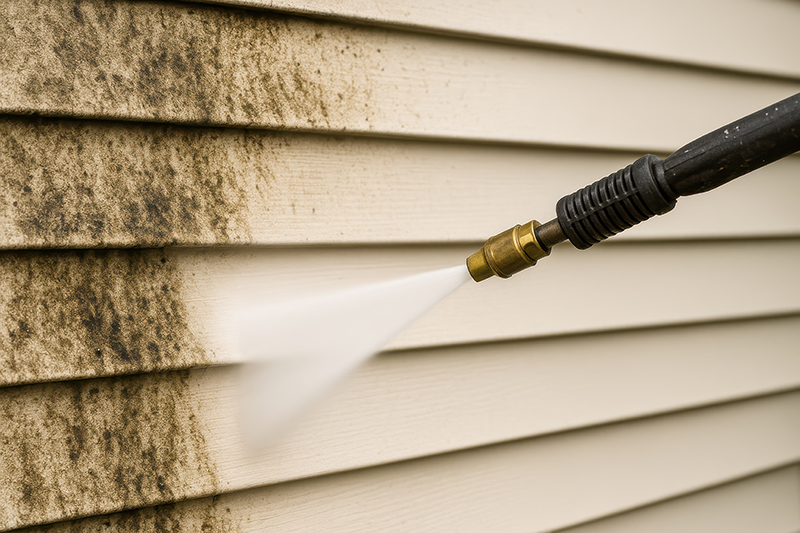
“There is a definite balance of pressure and chemical. A lot of people make the mistake of using too much pressure which can cause irreversible damage to substrates—blow out windows, punch holes in walls, and etch concrete/brick. Always do a test spot when applying chemicals.”
Roofs: Remove leaves and any other debris and apply minimum 10% bleach strength and let dwell around 8–10 minutes. Apply light rinse water and repeat if necessary. Never apply heavy pressure water to roofs. Gloeocapsa magma is usually the algae which turns roofs black and thrives in high humidity.
Awnings:A good and safe cleaner is sodium percarbonate (OxiClean®). Never pressure wash an awning. Apply a UV protectant when finished; it dries out to repel water and guard against UV rays. Never wait till you see dirt to clean an awning. NEVER use bleach on a vinyl awning. It can be much more economical to clean an awning than replace it. Awnings, both fabric/vinyl, can last many years with proper care. It often is the showcase of your business.
Basic Power Washing:Use caution when using a pressure washer as it can damage flesh, eyes, and even put a hole through your arm/leg. Safety glasses…
GPM (gallons per minute) is just as important as PSI (pounds per square inch). GPM can get a job finished quicker.
Specialty chemicals can be used with care to clean rust, battery acid, limestone, marble, granite, graffiti, etc.
If correctly done, pressure washing can greatly enhance surfaces and can take years of dirt, mildew, mold. If selling or painting a home, the visual effect can be amazing.